


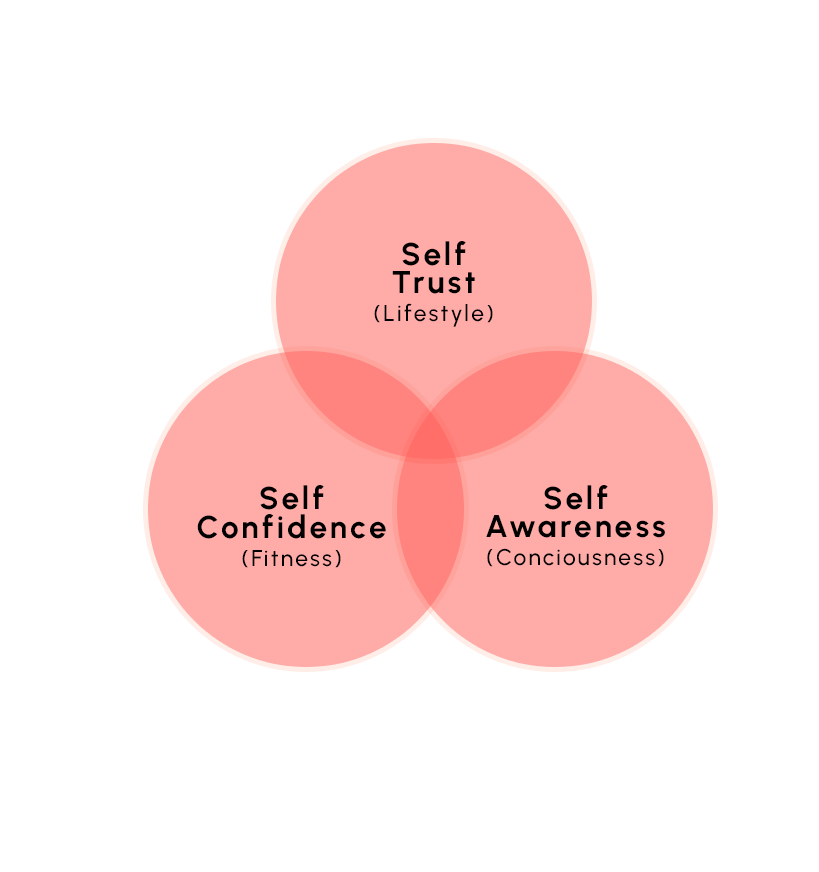
You want energy, clarity, and peace without burning out? Real talk: health is the foundation, and balance is the game. The 20-30-50 Guideline is YDBG’s simple, principle-centered way to build sustainable well-being—no biohacking circus, no perfectionism trap. Just a clear framework that helps you move, live, and think with intention.
The promise is simple: prioritize what actually moves the needle. In the YDBG method, you balance three dimensions:
- Fitness (20%): How you move and how your body performs.
- Lifestyle (30%): Everything you introduce to the body—food, light, sleep, substances, media, space.
- Consciousness (50%): Your awareness, inner connection, and how you relate to others and the moment.
Why those percentages? Because most people are over-indexing on workouts, supplements, or extreme diets while starving the deeper layer driving all choices: consciousness. This guideline flips that script: you train the mind and heart first, shape your environment second, and push the body third. Principle over preference. Sustainable over sensational. Forward-thinking, not trend-chasing.
What balance looks like in practice
Picture a triangle with three connected points: Fitness, Lifestyle, Consciousness. Each point feeds the others. You don’t need symmetry; you need harmony. When life gets heavy, you adjust the ratios but keep the principle. That’s how you stay grounded when things get wild.
- Fitness (20%): Give your body a strategic dose of movement—strength, steps, mobility—enough to stimulate adaptation without frying your nervous system.
- Lifestyle (30%): Shape inputs so your biology can do its job—sleep, sunlight, hydration, nutrient-dense meals, nature, clean environment, digital boundaries.
- Consciousness (50%): Expand your awareness and emotional regulation—breath, meditation, journaling, therapy, prayer, meaningful connection, self-honesty. Relationships are mirrors. Use them.
The “why” behind the ratio
- Consciousness leads behavior. If your awareness is low, you self-sabotage even with a perfect plan. When awareness is high, discipline feels lighter because it’s aligned, not forced.
- Lifestyle carries momentum. You set up the playing field. Choose better inputs, and your body thanks you all day long.
- Fitness is the spark, not the bonfire. Most people don’t need more beatdowns; they need smart, consistent training stacked on a strong base.
Play the game: stress and recovery
Your body is always negotiating stress. Workouts, caffeine, deadlines, nonstop scrolling—it all counts. The 20-30-50 Guideline helps you play the game: lean on consciousness to manage pressure, design your lifestyle to buffer it, then add the right dose of training. That’s how you stay powerful without the crash.
A simple self-audit to find your baseline
Rate yourself 1–10 in each dimension. Be transparent—that’s strength.
- Fitness: Strength, mobility, stamina. How often do you move intentionally? Are you progressing or guessing?
- Lifestyle: Sleep quality, meals, hydration, sun, environment, substances/media. Are your inputs helping or hijacking you?
- Consciousness: Awareness, presence, emotional regulation, connection with others, ability to pause before reacting. Do you feel centered more often than not?
If Fitness is your highest score: great. Reclaim energy by boosting Lifestyle and Consciousness. If Consciousness is low: start here or everything else feels like pushing a boulder uphill.
The 7-day 20-30-50 starter plan
This is an easy, punchy on-ramp. It’s designed for high achievers, growth junkies, and anyone recovering from perfectionism or emotional chaos. Keep it light and consistent. No heroics.
Daily anchors:
Consciousness (50% focus)
- 10 minutes morning breath + intention.
- 5 minutes evening reflection: Where did I react vs. respond? What did I learn?
- 1 meaningful check-in with a person who matters. Relationships are mirrors; use them to see yourself more clearly.
Lifestyle (30% focus)
- Sleep: 7–9 hours, same wake time daily.
- Hydration: 0.6–0.8 oz water per pound of body weight over the day (adjust if medical considerations apply).
- Sun + steps: 10 minutes of morning sunlight; walk 6,000–8,000 steps minimum.
- Protein + plants: Base each meal on protein and fiber-rich plants. Keep it boring and consistent this week. Your nervous system loves predictability.
Fitness (20% focus)
- Strength: 2–3 full-body sessions per week, 30–45 minutes, using compound moves (squats/hinges/push/pull).
- Move daily: On non-lifting days, walk or do 15–20 minutes of mobility or light cardio.
- Keep 2 reps “in the tank.” Progress slowly; consistency builds momentum.
Your daily cadence (example)
- Morning (10–20 min): Breath practice or meditation, set one intention for the day. Quick sunlight exposure.
- Midday (10–15 min): Walk or micro-mobility during a break. Choose a nourishing lunch on autopilot.
- Evening (10–15 min): Screens off 30–60 minutes before bed. Reflect: What did today teach me? Where can I apply principle over preference tomorrow?
What “easy” looks like for each dimension
Consciousness (50%)
- 4×4 Breath: Inhale 4, hold 4, exhale 4, hold 4. Repeat 8 rounds when stressed.
- Two-Question Journal: What am I feeling? What do I need? Do this nightly.
- 3-2-1 Reflection: 3 wins, 2 lessons, 1 action for tomorrow.
- Micro-pauses: Before you react, take one deep breath and soften your shoulders.
- Connection ritual: Ask one person a real question, then listen fully. Transparency builds trust; trust builds resilience.
Lifestyle (30%)
- Sleep boundary: Set an alarm for “get ready for bed,” not just for waking up.
- Food framework: Protein + produce + pleasure. Give yourself one joy-food daily without guilt. Principle over preference, not punishment over desire.
- Digital diet: One “no scroll” window 60 minutes after waking and 60 minutes before bed. Your nervous system will thank you.
- Space hygiene: Clear one surface daily—desk, counter, car. Your environment is a quiet coach.
Fitness (20%)
- Minimal Effective Dose Lifts:
- Day A: Squat or split squat, push (e.g., push-up or press), plank.
- Day B: Hinge (e.g., deadlift or hip hinge), pull (row or pull-down), carry.
- 2–3 sets each, slow control, stop 1–2 reps before failure.
- On ramps: If you haven’t trained in a while, start with bodyweight and bands. Progress load weekly in small jumps.
- Move more, not just harder: Take an extra flight of stairs. Walk during calls. Stretch while the coffee brews.
Common mistakes this method avoids
- Overtraining while under-recovering: You don’t need daily exhaust. You need daily intention.
- Optimizing supplements before sleep and stress: That’s backward. Build the base, then add tools if needed.
- All-or-nothing thinking: The 20-30-50 ratio kills perfectionism. You calibrate; you don’t catastrophize.
- Outsourcing wisdom: Use experts, but trust your sensors. Consciousness is your in-house coach.
The rebalance protocol: when life hits hard
Life will wobble your routine. Cool. Here’s how to adapt quickly without losing the plot.
- If you’re overwhelmed or grieving:
- Shift to 60-30-10 for a week: 60% consciousness, 30% lifestyle, 10% fitness. Focus on breath, walks, and sleep. Lift later.
- If you’re time-crunched:
- Go micro: 5-minute breath, 10 push-ups, 10 air squats, 5-minute walk, protein shake, bed on time. Not fancy. Very effective.
- If you’re traveling:
- Prioritize sunlight, water, walking. One bodyweight routine every other day. Journal nightly for 5 minutes.
- If you’re crushing a big goal (launch week, exams):
- Hold the line on sleep, steps, and 10-minute awareness practices. Keep lifting at maintenance volume. Don’t add new stressors.
Minimal Viable Week (MVW) template
Consciousness
- 10 minutes breath/meditation daily.
- 5 minutes nightly journal.
- One honest check-in with someone you trust.
Lifestyle
- Same wake time all week.
- 8 glasses of water minimum; 10-minute morning sunlight.
- 3 meals centered on protein + plants.
Fitness
- Two 30-minute full-body sessions.
- Daily steps goal.
That’s it. Nail the MVW and you’ve already shifted your trajectory.
How to track without getting obsessive
Use a simple “Balance Bar” with three checkboxes each day:
- C (Consciousness): Did I practice breath/meditation or journal today?
- L (Lifestyle): Did I hit sleep/water/sun/meal basics?
- F (Fitness): Did I lift, walk, or mobilize?
Hit two of three boxes most days, all three at least three days a week. Aim for a 7-day green streak. If you miss a day, don’t stack guilt—stack today’s actions. Forward only.
Big levers inside each dimension
Consciousness (most leverage):
- Morning stillness, micro-pauses, evening honesty.
- Name your feelings out loud. Language expands awareness.
- Seek mirrors: a coach, therapist, partner, journal. Be transparent; truth moves the needle.
Lifestyle (next most):
- Sleep is non-negotiable. Guard it like rent money.
- Sunlight early, dimness late. Your body is light-sensitive hardware.
- Protein + fiber at each meal stabilizes energy and mood.
- Hydration is rhythm; sip all day, don’t chug at night.
- Curate inputs: less doomscroll, more nature, music, conversation.
Fitness (potent, but dosed):
- Strength twice weekly beats random HIIT five times.
- Walks are medicine. Steps compound like interest.
- Mobility saves joints and improves lifting. Ten minutes post-lift pays off.
For the high achiever who “already works out”
If you’re lifting five days, but sleep is chaos and your mind’s loud at 2 a.m., cut training to three days for a month. Put that time into Consciousness (breathwork, therapy, journaling) and Lifestyle (sleep timing, sunlight, food rhythm). Watch your lifts improve anyway. Principle over preference.
For the recovering perfectionist
Forget 90-minute morning routines. Your win is consistency without pressure. Choose the smallest action that changes your state:
- 3 breaths, one glass of water, 5-minute walk. That counts. Stack from there.
For the busy parent
Train at home 2–3x/week with dumbbells or bands. Walk with the stroller. Make family dinners protein-forward. Turn story time into your evening downshift. Consciousness practice? Two questions with your partner: What felt good today? Where did we struggle?
For the gym newbie
Focus on form, not numbers. Start with bodyweight and take videos for self-check or coaching. Celebrate showing up, not PRs. The body adapts to kindness as much as to challenge.
How to know it’s working
- You feel calmer, even with the same workload.
- Meals feel simpler. You’re not negotiating with yourself all day.
- Workouts feel strong, not desperate.
- Sleep becomes deeper and more predictable.
- Relationships feel more honest. You repair faster after conflict.
Frequently asked questions
- Can I flip the percentages if I’m training for a race?Temporarily, yes. During peak training, you might run 20-40-40 (fitness-lifestyle-consciousness). But don’t delete consciousness—double down on breath and recovery so you don’t cook your nervous system.
- Isn’t consciousness too “woo”?Not here. We’re talking nervous system regulation, self-awareness, and intentional connection. Practical spirituality. If meditation isn’t your thing, try breathwork, nature walks, or honest conversations. Different doors, same room.
- Do I need supplements?Maybe later. First, nail sleep, hydration, whole foods, and sunlight. If your basics are inconsistent, supplements are expensive hope.
- What if I miss a day?You didn’t fail. You’re in a longer game. Return to your MVW tomorrow. Principle over preference.
Turn the guideline into your daily game plan
- Pick one action per dimension you can do even on your worst day.
- Consciousness: 3 slow breaths before emails.
- Lifestyle: 10 minutes of sunlight.
- Fitness: 10-minute walk after lunch.
- Put them in your calendar as alarms.
- Track with the Balance Bar for 7 days.
- Review on Sunday: What kept me steady? What needs right-sizing?
The deeper principle
This framework is principle-centered, not personality-centered. It doesn’t care if you’re the hardcore lifter, the mindful yogi, or the spreadsheet CEO. It asks: Does your day reflect your values? Are you choosing from awareness, not autopilot? That’s the balance we’re after—the kind that lasts when life inevitably shifts.
Final nudge
You don’t need more hype. You need harmony. The 20-30-50 Guideline is your map:
- Consciousness builds the captain.
- Lifestyle builds the ship.
- Fitness rides the wind.
Play the game. Start small. Stay honest. Health is the foundation—and when the foundation is strong, everything you build stands taller and lasts longer.